Kujiale AI Intelligent Design Platform Operation
Built a high-quality AI business knowledge base and drove algorithm iterations for Oppein's AI intelligent design platform.
Kujiale is delivering a brand-new AI intelligent design platform for a leading B-end client (Oppein) in the home furnishing industry. This project required deep algorithm refinement and experience optimization to ensure commercial deployment standards. Here is a review of the core work using the STAR method:
Context & Background
- Commercial Standardization: Kujiale is delivering a brand-new AI intelligent design platform for a leading B-end client (Oppein). To ensure the AI-generated interior design solutions meet commercial deployment standards, it requires not only massive underlying data support but also deep algorithm refinement and experience optimization for actual business scenarios.
Objectives
- Knowledge Base & Quality Assurance: As an AI Product Operator, the core objective is to build a high-quality AI business knowledge base and, through large-scale stress testing and use-case troubleshooting, identify blind spots in the AI generation logic, driving the R&D team's iteration to ensure extremely high commercial usability.
Strategy & Execution
- "Feeding" AI & Building Rule Engine: Processed over 5,000 interior hardware model data from scratch, assigned precise attribute tags, and deeply studied prompt composition. Configured over 100 sets of spatial rule templates for different styles, providing clear learning samples for the AI algorithm.
- "User Advocate" Limit Testing: Went beyond routine testing by introducing over 300 sets of real floor plans of varying sizes and cross-verifying them against over 10 design styles.
- Cross-departmental Collaboration & Definition: Systematically categorized scattered bugs found during testing (such as "light overexposure", "model collision", "rendering perspective distortion") into over 20 product optimization requirement work orders. Communicated closely with the R&D team to promote the upgrade of underlying rendering logic and layout algorithms.
Outcomes
- Data Richness: Established a standardized tag retrieval and model configuration system, significantly enhancing the data richness of the AI platform.
- Quality Delivery: Through the implementation of over 20 key optimization suggestions, significantly reduced the "manual secondary modification rate" of AI solutions, ensuring the smooth delivery and high-standard launch of the Oppein AI intelligent design platform.
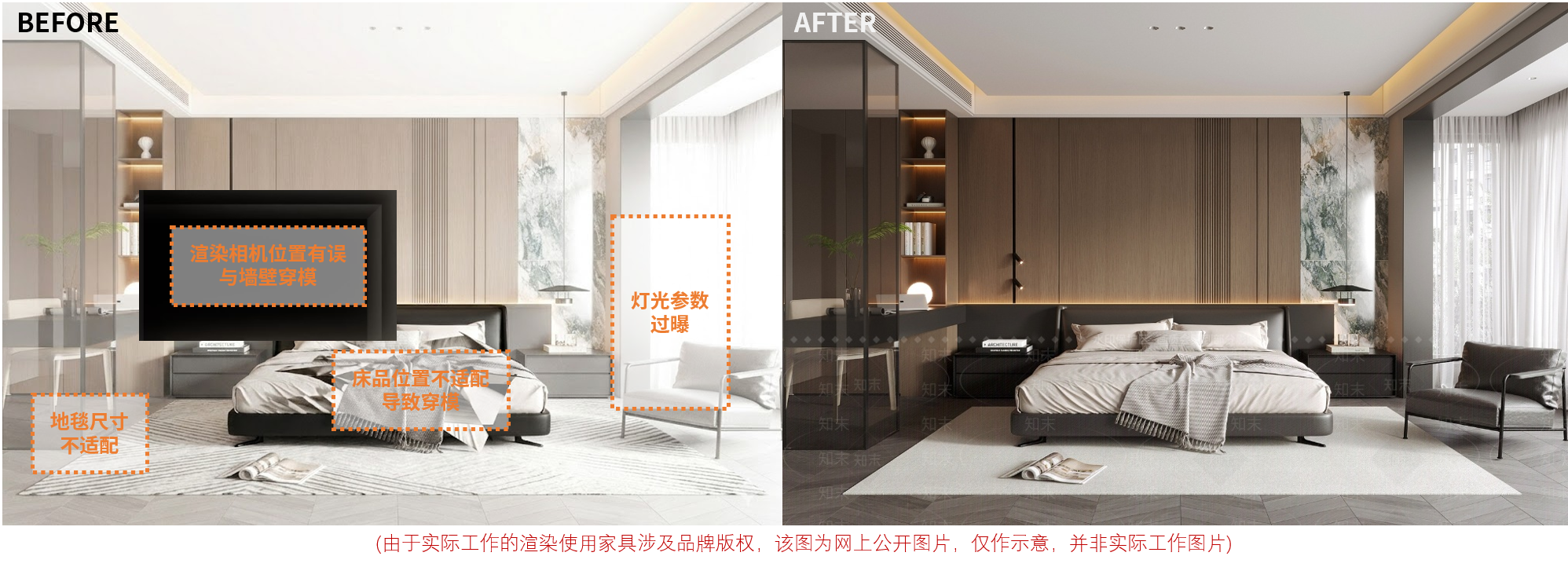
Visual Verification: Before & After Comparison
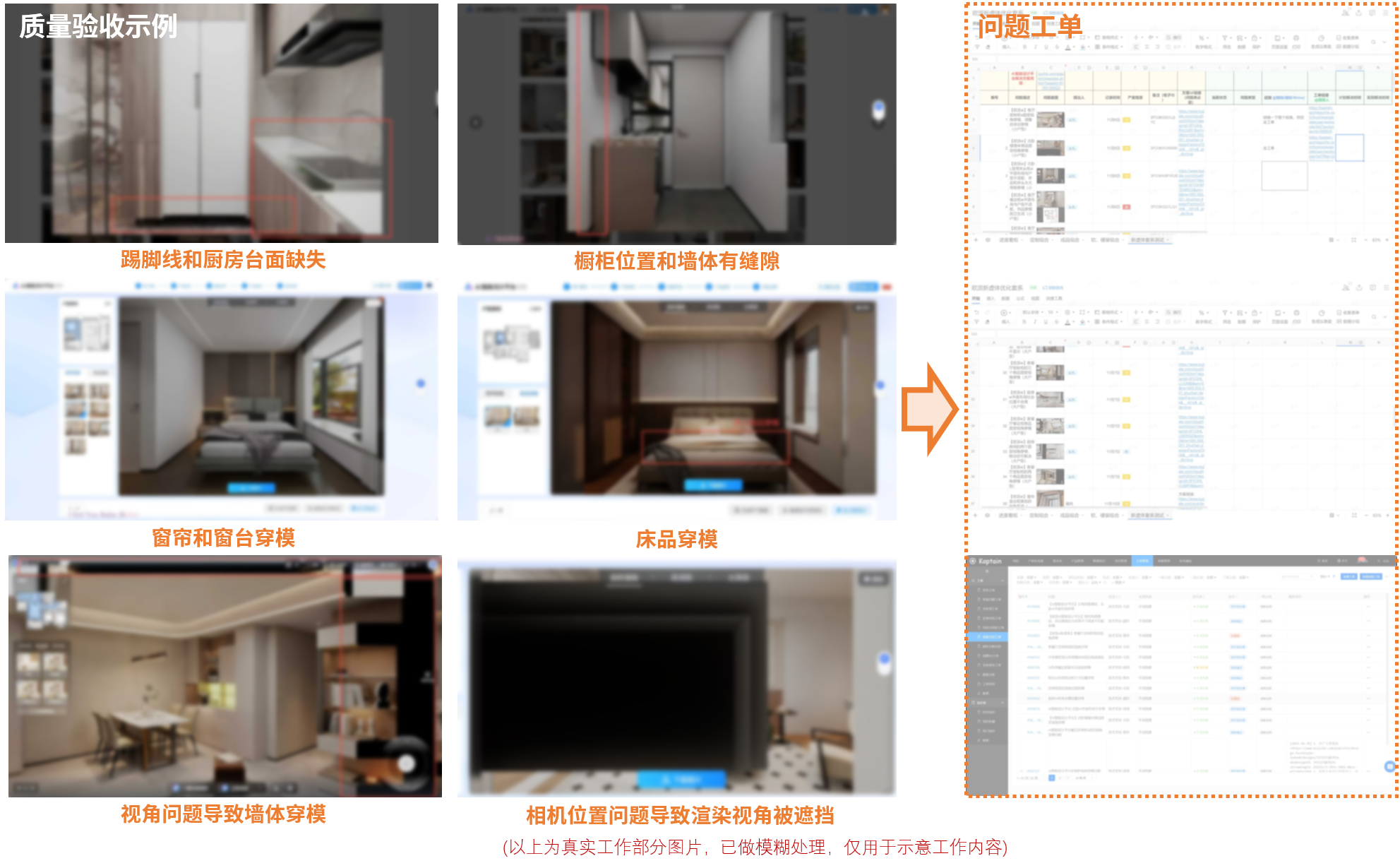
Business Driven: Testing & Optimization Workflow
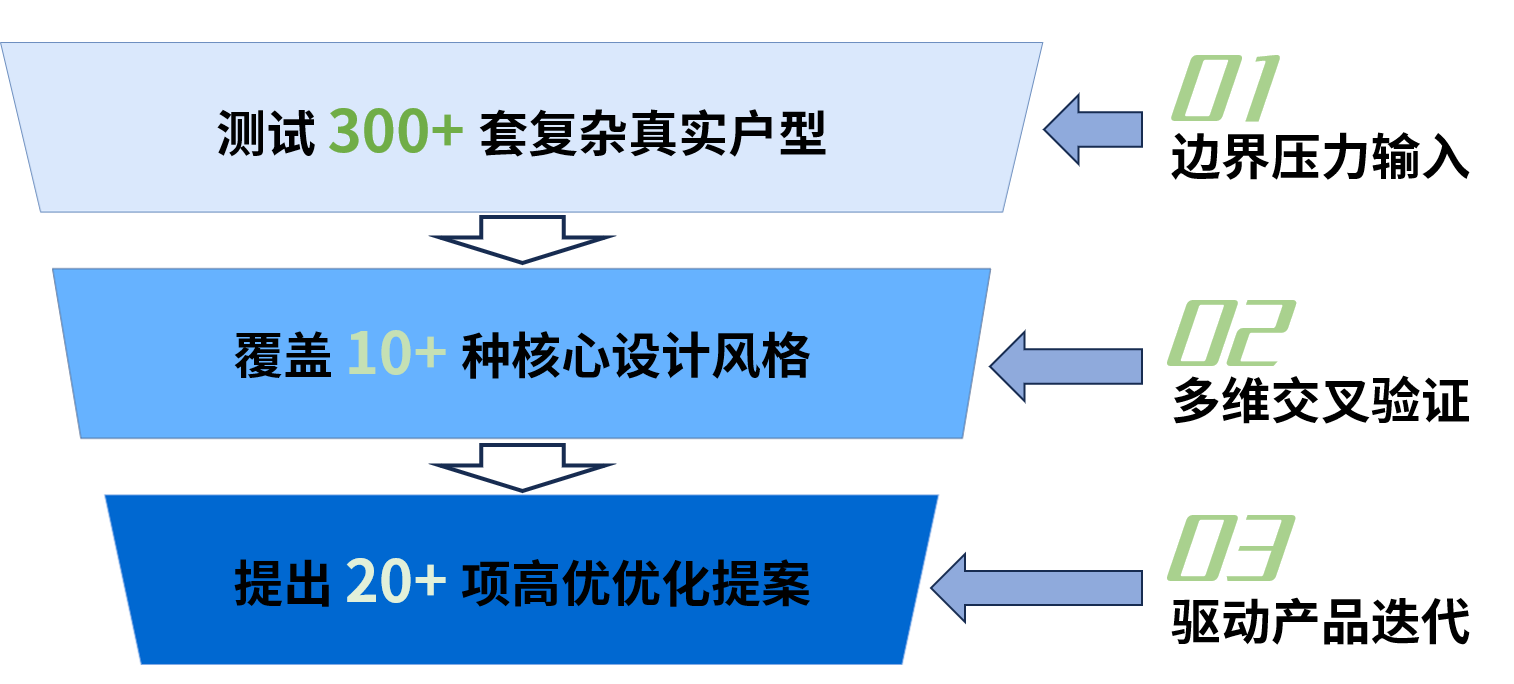
Data Funnel: Optimization Process
AI Generation Quality & Experience Optimization
Distilling common issues from chaotic test phenomena to control the final commercial delivery quality.
- Boundary Stress Testing: Executed cross-validation on 300+ complex real-world layouts and 10+ core styles.
- Distilling Common Rules: Pinpointed AI generation blind spots like light overexposure and model collision.
- Driving R&D Iteration: Delivered 20+ high-priority optimization proposals, ensuring commercial deployment for Oppein.

🌿 Architecture Deconstruction: AI Underlying Spatial Rules & Style Topology
AI Business Knowledge Base & Rules Engine
Discarding blind "building blocks", deeply understanding pan-home furnishing business logic, and establishing a scalable underlying rule base for AI.
- Deconstructing Complex Business: Sorted out the real business scenarios of B-end enterprise (Oppein), translating the experience of senior designers into machine-readable configuration rules.
- Building Underlying Knowledge Base: Independently completed system configuration of 100+ exclusive furniture combinations, fully covering core spaces like living room, dining room, bedroom, and study room.
- Establishing Standardized Parameters: Finely defined the underlying logic of 3 core design styles, including hard furnishing component association, soft furnishing anti-collision, and circulation avoidance constraints.

Core Strategy: Scene Combination Asset Multiplication Based on "Core SKU Anchor"
- Establish Business Anchors: Deeply understand B-end business demands, taking Oppein's real selling products (specific sofas, dining tables, bed frames, desks) as the absolute core of scene generation (Anchor SKU).
- Introduce Style Variable Engine: Deconstruct the abstract "style" into configurable accessory variables (e.g., modern minimalist geometric rugs, Italian luxury metal lamps).
- Scale Data Asset Multiplication: Through the matrix configuration formula of "Core Anchor × Style Variable", successfully multiply a single product into 100+ plug-and-play AI combination libraries. Ensure that AI not only guarantees spatial aesthetics during automatic layout but also precisely drives the exposure and conversion of client-specified products.